Uncategorized

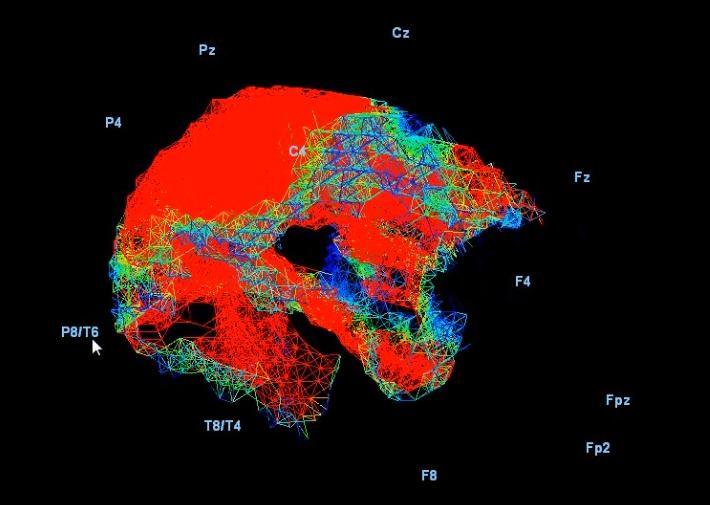
Geometric Tensegrity Visualization from BrainMaster Educational Tools Simulator

Cantor’s Relational Architecture and Brain Oscillatory Tensegrity

Bill Brubaker, MEd  —  Stress Therapy Solutions Thomas F. Collura, Ph.D.  —  Founder & President, BrainMaster Technologies, Inc. BrainMaster Technologies — Perspectives in Neurofeedback — 2025 Companion to: Brain Oscillatory Tensegrity: A New Framework for Understanding Neural Stability and Self-Regulation From Geometry to Frequency: How David Cantor’s Relational Architecture Deepens the Brain Oscillatory Tensegrity Model […]

Cantor’s Relational Architecture and Brain Oscillatory Tensegrity Read More »

tension cable

Brain Oscillatory Tensegrity – A Multidimensional Perspective on EEG and Self-Regulation

Bill Brubaker, M.Ed., M.Psych. , BCN, QEEG-D — Stress Therapy Solutions, Inc. Thomas F. Collura, Ph.D., MSMHC, QEEG-D, BCN, LPCC-S — Founder & President, BrainMaster Technologies, Inc. BrainMaster Technologies — Perspectives in Neurofeedback — 2026 How Buckminster Fuller’s architectural insight illuminates the dynamic balance of brainwave rhythms — and what it means for neurofeedback practice. We

Brain Oscillatory Tensegrity – A Multidimensional Perspective on EEG and Self-Regulation Read More »

tensegrity

Buckminster Fuller’s Tensegrity and Neurofeedback

(composed by Claude Sonnet under the guidance of the author) (Thanks to Bill Brubaker for helpful discussions!) Fuller coined “tensegrity” (tensional integrity) to describe structures where isolated components under compression float within a continuous network of tension elements. The key insight is that stability doesn’t come from stacking rigid parts — it comes from the

Buckminster Fuller’s Tensegrity and Neurofeedback Read More »

Child learning cybernetics and robotics based on feedback loops

Norbert Weiner’s Cybernetics and Neurofeedback

(composed by Claude Sonnet under the guidance of the author) I. Wiener’s Intellectual Foundation Norbert Wiener (1894–1964) was one of the towering mathematical minds of the twentieth century, and his central insight was deceptively simple: information, feedback, and control are universal principles that apply equally to machines and living organisms. In his landmark 1948 book

Norbert Weiner’s Cybernetics and Neurofeedback Read More »

Applied Neurophysics – A 21st Century Science of the Brain and Mind

Thomas F. Collura Ph.D., MSMHC, QEEG-D, BCN, LPCC-S (written entirely by the author – no AI was used) Original date of publication: 7/16/06 Applied Neurophysics is a label that applies to the interdisciplinary pursuit of an integrated understanding of the brain and mind. It incorporates a great deal of “old” science, but it is a

Applied Neurophysics – A 21st Century Science of the Brain and Mind Read More »

EEG as a Predictor of Medication Response – Updated December 2025

EEG as a Predictor of Medication Response:An Updated Review and Analysis Thomas F. Collura Original Paper: February 2012Updated: December 2025 (in collaboration with Claude.ai) Abstract This report examines the evidence that the human electroencephalogram (EEG) can be used to help predict medication response in clients with mental health concerns. This updated review incorporates research published

EEG as a Predictor of Medication Response – Updated December 2025 Read More »

Advances in EEG Analysis – Homomorphic Deconvolution of EEG using ICA and sLORETA

We have implemented a system that performs homomorphic deconvolution of resting EEG samples, using a built-in ICA, frequency-domain averaging, sLORETA, and source localization to deconvolve EEG rhythms into individual sources and patterns.  The signature captures the morphology of one “event” being produced by that brain source. The question being asked is, if the brain were

Advances in EEG Analysis – Homomorphic Deconvolution of EEG using ICA and sLORETA Read More »

Symptoms, Disorders, Functions, and the NIH Research Domain Criteria

Symptoms, Disorders, Functions, and the NIH Research Domain Criteria There are historically two basic approaches to evaluation and treatment of mental and emotional disorders, and although they are in some conflict, it is possible to combine them to ensure best practices.  These are the disorder-oriented symptom-based approach, epitomized by the DSM-V and its associated practice

Symptoms, Disorders, Functions, and the NIH Research Domain Criteria Read More »

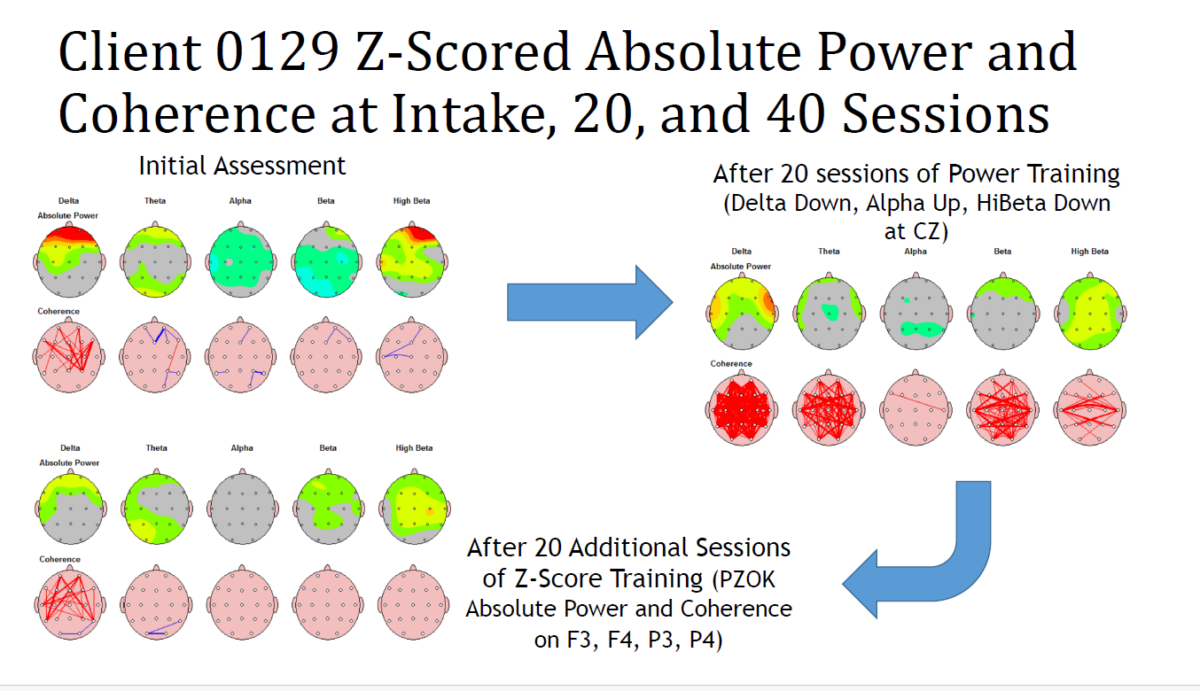
Z-Score Neurofeedback: Retrospect and Prospect: Reviewing the Literature

“The simplest type of breakdown exhibits itself as an oscillation in a goal-seeking process which appears only when that process is actively invoked.”   — Norbert Wiener (1988) The Human use of Human Beings: Cybernetics and Society”, p. 1163, Da Capo Press. Z-score neurofeedback (ZNF) is an advanced EEG-based biofeedback technique that uses real-time statistical comparisons

Z-Score Neurofeedback: Retrospect and Prospect: Reviewing the Literature Read More »