


Buckminster Fuller’s Tensegrity and Neurofeedback
(composed by Claude Sonnet under the guidance of the author)
(Thanks to Bill Brubaker for helpful discussions!)
Fuller coined “tensegrity” (tensional integrity) to describe structures where isolated components under compression float within a continuous network of tension elements. The key insight is that stability doesn’t come from stacking rigid parts — it comes from the pre-stressed balance between compression struts and tension cables. No strut touches another; they’re suspended in a web of continuous tension.
The structural principles are:
Pre-stress — the structure is already under load before any external force is applied. This pre-stress is what gives it both stiffness and resilience simultaneously.
Omnidirectional load distribution — a force applied at any point disperses instantly through the entire network. There’s no localized failure cascade in the way a column-and-beam structure might have.
Form follows force — the shape of the structure is a direct expression of its force balance. Change the tension, and the geometry changes predictably.
Non-linear mechanics — tensegrity structures stiffen as they’re loaded (strain stiffening), unlike conventional materials that weaken or deform linearly.
Tensegrity in biology — the cellular model
Donald Ingber (Harvard) pioneered the idea that cells are tensegrity structures in the 1990s. The cytoskeleton — composed of actin filaments (tension), intermediate filaments (tension), and microtubules (compression) — maps almost perfectly onto a tensegrity model. The cell doesn’t need a rigid shell; its shape and mechanical properties emerge from this internal pre-stressed balance.
This was transformative for cell biology because it explained:
- How cells can be simultaneously deformable and mechanically stable
- Why mechanical signals from the extracellular matrix propagate instantly to the nucleus
- How cells sense and respond to substrate stiffness (mechanosensing)

Tensegrity and the brain — multiple scales of application
Here’s where it gets genuinely fascinating. Tensegrity principles apply to the brain at several nested scales simultaneously.
- The neuronal cytoskeleton
Individual neurons are tensegrity structures in Ingber’s sense. The axon’s mechanical stability is maintained by microtubules (compression) under tension from neurofilaments and actin networks. The growth cone — the exploratory tip of a growing axon — is an exquisitely dynamic tensegrity system that converts mechanical signals from the substrate into directional growth decisions. This is why axon pathfinding is mechanosensitive, not just chemosensitive.
- The extracellular matrix and glial scaffold
The brain’s extracellular matrix (ECM), along with the glial meshwork (particularly astrocytes), forms a tissue-level tensegrity scaffold. The perineuronal nets — lattice-like ECM structures surrounding fast-spiking interneurons — act as mechanical stabilizers for those cells. Their stiffness and geometry constrain synaptic plasticity, which is why disrupting perineuronal nets re-opens critical-period plasticity in adults. This is structural tensegrity directly regulating synaptic computation.
- Network-level functional tensegrity
This is arguably the most intellectually exciting application. Researchers like Volgushev, and theorists working in computational neuroscience, have proposed that functional neural networks exhibit tensegrity-like properties:
- Excitation and inhibition as compression and tension — excitatory and inhibitory neurons form a pre-stressed balance. The E/I ratio is the functional analog of the compression-tension balance. Too much excitation = instability (seizure). Too much inhibition = collapse of activity.
- Pre-stress as tonic activity — the baseline firing rates of neural populations are a form of functional pre-stress that allows rapid, omnidirectional response to inputs.
- Distributed load distribution — in recurrent networks, a perturbation to one node (neuron or population) disperses through the connectivity matrix in ways that parallel how mechanical loads spread through tensegrity struts.
- The connectome as tensegrity architecture
At the large-scale level, Bassett and Bullmore’s work on the brain’s structural and functional connectome reveals small-world topology with rich-club organization — hubs that are densely interconnected while peripheral nodes connect via long-range projections. This architecture produces mechanical-analog properties: high global efficiency (rapid load/signal distribution) with local robustness (no single point of failure), exactly what you’d expect from a well-designed tensegrity.
The default mode network, salience network, and executive control network form something like a “soft tensegrity” — mutually constraining networks whose anti-correlated activity patterns maintain a dynamic equilibrium. When one network activates strongly, the others are suppressed, maintaining the system’s functional stability.
- Oscillatory tensegrity — temporal structure
Perhaps the most speculative but compelling extension: rhythmic neural oscillations (gamma, beta, alpha, theta) as temporal tensegrity. Karl Friston’s free energy principle and active inference framework imply that the brain maintains a kind of predictive pre-stress — generative model expectations held in tension against sensory prediction errors. The oscillatory hierarchy (theta nesting gamma, for instance) provides a temporal scaffolding that distributes and compresses information across timescales, analogous to how spatial tensegrity distributes mechanical load across space.
Key tensions and open questions
The main scientific tension is whether tensegrity is a literal structural principle (as Ingber argues at the cell level) or a useful metaphor at network scales. Critics note that neural networks differ from mechanical tensegrity in crucial ways: they’re not pre-stressed in a direct physical sense at the population level, and the analogy of E/I balance to compression-tension may obscure more than it illuminates.
The most productive view is probably hierarchical: tensegrity is mechanistically true at the cellular and cytoskeletal scale, analogically powerful at the network and cognitive scale, and the challenge is to find the precise mathematical translations between scales — where the metaphor becomes quantitative prediction.
Let me show you the multi-scale architecture visually:You can click any box in the diagram to explore a specific aspect in depth.
The deepest implication of the tensegrity framework for neuroscience is probably this: the brain is not primarily a computational machine that happens to have physical structure — it is a physical tensegrity system whose computational properties emerge from mechanical principles. Ingber’s group has shown that the same mathematical formalism (pre-stress, geometric stiffness matrices) that describes a Fuller dome also describes how the cytoskeleton responds to mechanical stimulation, how mechanosensitive ion channels open, and how those mechanical signals propagate to gene expression.
If that chain holds at larger scales — and there’s growing evidence it does — then disorders like epilepsy (E/I imbalance, loss of functional pre-stress), schizophrenia (dysconnectivity, loss of rich-club organization), and even chronic pain (central sensitization as loss of inhibitory tension) can be understood as tensegrity failures: the pre-stressed balance is lost, the structure either collapses into hyper-excitability or rigidifies into pathological oscillatory patterns.
The well-established foundation
Before calling it “oscillatory tensegrity,” it’s worth being precise about what we know exists:
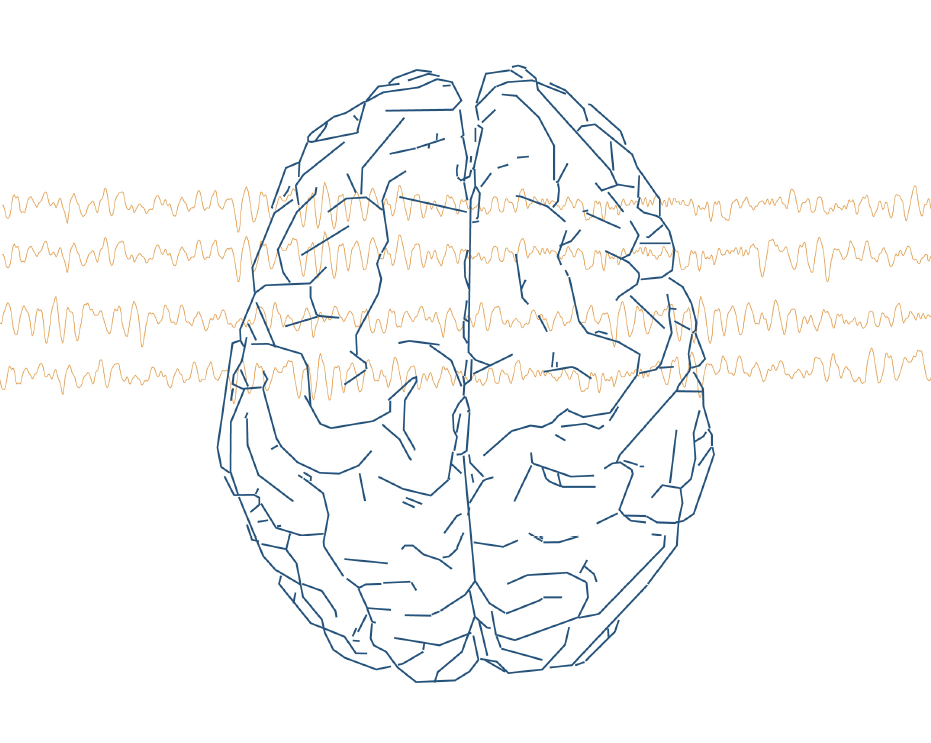
Cross-frequency coupling (CFC) is robustly documented. Theta oscillations (4–8 Hz) in the hippocampus nest gamma bursts (30–80 Hz) within their troughs — the so-called theta-gamma code. This isn’t metaphorical; it’s measurable in single-unit recordings, LFP, EEG, and MEG. Jensen and Lisman formalized this as a mechanism for organizing working memory capacity (each theta cycle can hold ~7 gamma subcycles, matching Miller’s famous “7 ± 2” chunk limit).
Phase-amplitude coupling extends this: slow oscillations (delta, theta) modulate the amplitude of faster ones (gamma, high-gamma). This creates a hierarchical temporal scaffold — a nested timing structure that organizes information across timescales simultaneously.
Anti-correlated network dynamics are equally well established. The default mode network and dorsal attention network suppress each other reciprocally. This mutual inhibition isn’t just statistical — it has a measurable oscillatory signature (alpha power inversely tracks attentional engagement), and disrupting it (as in ADHD or early Alzheimer’s) produces characteristic functional collapse.
Where tensegrity specifically enters
Now, the key question: does this oscillatory architecture have genuine tensegrity properties — not just as metaphor, but as structural principle?
Three lines of evidence suggest yes:
- Pre-stress — the brain is never silent
The brain maintains non-zero baseline firing rates even in the complete absence of input (spontaneous activity, resting state). This is metabolically expensive — the brain consumes ~20% of the body’s energy at rest. From a purely computational standpoint, this seems wasteful. From a tensegrity standpoint, it’s necessary: it’s the functional pre-stress that keeps the network poised for rapid, sensitive response. A network at zero activity can’t respond quickly; one with tonic baseline activity can modulate bidirectionally.
Critically, Shew and Plenz showed (2011) that cortical networks naturally self-organize to criticality — the precise point between order (over-damped, too much inhibition) and chaos (too little). At criticality, networks exhibit maximum dynamic range, optimal information transmission, and maximum susceptibility to perturbation. This is mathematically equivalent to a tensegrity structure pre-stressed to its stability boundary — maximally responsive before crossing into instability.
- Omnidirectional perturbation propagation
In a tensegrity structure, force applied anywhere distributes globally. In cortical oscillatory networks, this is measurable: transcranial magnetic stimulation (TMS) applied to one cortical site doesn’t just activate that region — it propagates as a characteristic “TMS-evoked potential” that sweeps across the cortex in a stereotyped pattern determined by the structural connectome. The propagation pattern reflects the global tension balance of the network, not just local connectivity. Massimini and Tononi’s group used this to measure the “complexity” of this propagation — high complexity (rich, differentiated propagation) corresponds to consciousness; low complexity (stereotyped, collapsing response) corresponds to deep sleep, anesthesia, or disorders of consciousness.
- Strain stiffening — the brain resists destabilization non-linearly
Genuine tensegrity structures stiffen non-linearly as they’re pushed toward instability. Neural oscillatory networks show an analog: inhibitory feedback becomes stronger as excitation increases, due to the recruitment of fast-spiking parvalbumin interneurons (which respond preferentially to high-frequency, high-amplitude drive). This is not linear gain control — it’s a non-linear stiffening mechanism that protects network stability. The same interneurons that generate gamma oscillations are the “tension cables” that prevent runaway excitation. Lose them (as in certain forms of epilepsy or in schizophrenia models) and the strain-stiffening fails — the network can no longer resist large perturbations.
The temporal geometry argument
Here’s the most structurally coherent formulation of oscillatory tensegrity, and where the idea becomes genuinely original:
In spatial tensegrity, stability emerges from the geometry of tension and compression elements — their angles, lengths, and connectivity determine the structure’s mechanical properties. In oscillatory neural networks, stability emerges from the temporal geometry of phase relationships between oscillating populations.
Phase-locking between two oscillating populations creates a temporal “strut” — a rigid timing relationship that constrains the network’s degrees of freedom. Phase-dispersion (unlocking) creates temporal “slack.” The brain appears to actively regulate the number and strength of these phase-locking relationships to maintain a globally stable but locally flexible dynamic architecture.
Palmigiano et al. (2017, Nature Neuroscience) showed that flexible cognitive control — the ability to rapidly reconfigure which brain areas communicate — is implemented by precisely modulating gamma-band phase relationships under the scaffold of slower theta/alpha rhythms. The slow rhythms are the “continuous tension network”; the fast oscillatory bursts are the “isolated compression struts.” The brain reconfigures its functional connectivity not by rewiring axons (too slow) but by shifting phase relationships (fast, reversible, metabolically cheap).
This is oscillatory tensegrity in its most precise form: stability maintained through a pre-stressed balance of phase-locked and phase-dispersed oscillatory relationships, with force (information) distributed omnidirectionally through the phase structure, and non-linear stiffening preventing runaway synchrony or desynchrony.
Where it remains speculative
Being direct about the limits: the tensegrity framing at the oscillatory level has not been formalized in the way Ingber formalized cellular tensegrity. There is no published mathematical proof that the geometric stiffness matrix formalism of structural tensegrity maps onto the Jacobian of a coupled oscillator network, though the conceptual parallels are close enough that someone should try. Friston’s active inference / free energy framework comes closest — it treats the brain as minimizing variational free energy under a generative model, which has deep structural similarities to a pre-stressed system seeking a minimum-energy configuration — but even Friston doesn’t explicitly use the tensegrity formalism.
The honest summary: oscillatory tensegrity is not a confirmed theory; it is a highly productive explanatory framework grounded in well-established neuroscience (criticality, CFC, E/I balance, phase coupling) whose mechanical analog is coherent and makes testable predictions. The predictions it makes — that disrupting slow oscillatory scaffolds should produce non-linear instability, that network “stiffness” should be measurable via TMS propagation complexity, that phase-locking density should predict cognitive flexibility — are all empirically tractable and most have supportive preliminary evidence.
Let me make the temporal geometry visual:The widget lets you feel the key dynamics directly. Try dragging E/I balance to extremes — at low values the scaffold collapses (inhibitory over-damping), at high values it runs away (epileptiform). The “critical” state at E/I ≈ 1.0 with high gamma coupling is where the phase-lock bonds proliferate and the network is simultaneously most stable and most responsive. That’s oscillatory tensegrity in action.
The single most important prediction this framework makes — one that distinguishes it from a mere metaphor — is this: you should be able to measure the brain’s “structural stiffness” using perturbation + response complexity, in the same way you’d characterize a mechanical tensegrity structure by how it distributes an applied force. Massimini’s TMS-EEG work is doing exactly that, largely without using the tensegrity framing. That convergence between a structural engineering principle and empirical neuroscience, arriving independently from both directions, is what makes this more than an analogy.
Tom Collura
Ph.D., MSMHC, QEEG-D, BCN, NCC, LPCC-S, Founder
Cantor’s Relational Architecture and Brain Oscillatory Tensegrity
Bill Brubaker, MEd — Stress Therapy Solutions Thomas F. Collura,...
Read More
Brain Oscillatory Tensegrity – A Multidimensional Perspective on EEG and Self-Regulation
Bill Brubaker, M.Ed., M.Psych. , BCN, QEEG-D — Stress Therapy Solutions,...
Read More
Buckminster Fuller’s Tensegrity and Neurofeedback
(composed by Claude Sonnet under the guidance of the author)...
Read More